New guide helps professionals navigate sensitive conversations with children who have a care plan of adoption
A new resource from Adopt London is aiming to support how children’s social workers, family finders, and foster carers talk to children about adoption - one of the most sensitive and life-shaping conversations in a young person’s life.
The Telling Children About Adoption guide has been developed by two adoption social workers with the aim of supporting professionals working with children in care, offering a structured and compassionate approach to explaining why they cannot live with their birth families and what adoption means for their future.
An adoption care plan is likely to be confusing and emotionally overwhelming for most children. The guide recognises that these conversations are not only difficult for children, but also for the adults leading them. It provides practical advice, suggested language, and tools to help ensure that information is shared clearly, honestly, and sensitively.
Developed by experienced social workers Rachel Neeve and Steph McGuire with the support of their team and clinical psychologist Dr Megan Hollett, the guide emphasises that early conversations play a crucial role in shaping a child’s long-term sense of identity, self-esteem, and relationships.
Rachel Neeve, Adoption Social Worker and joint author of the guide said: “Talking with children about their experiences begins to help them make sense of their world and creates a sense of safety. It can feel really hard to talk to children about the reasons they’re in care, and social workers can worry about telling children things that might upset them. Steph and I developed this guide to help social workers and foster carers feel more confident in sharing difficult messages with children.”
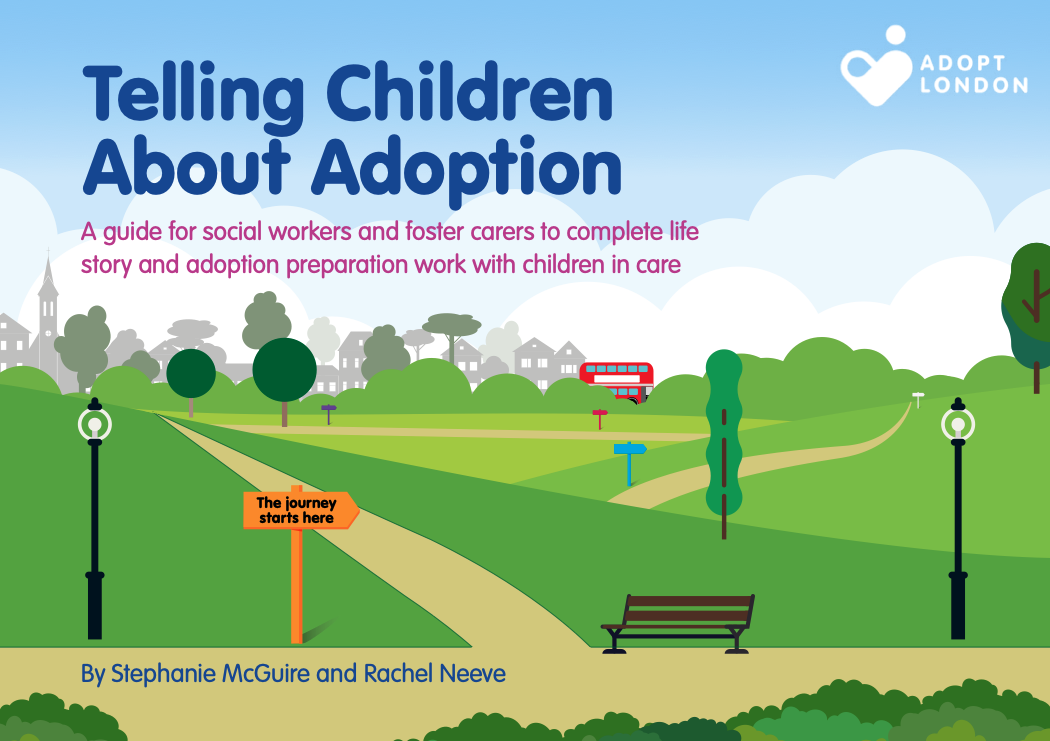
Designed for children aged 18 months and above, the guide breaks down life story conversations into manageable steps that can be adapted to each child’s level of understanding and individual circumstances.
Rather than a one-size-fits-all method, it encourages professionals to tailor discussions - recognising that every child’s journey, pace of understanding, and emotional response will differ.
The resource also promotes the use of creative and interactive techniques, such as play, storytelling, and visual tools, to help children process information in a way that feels safe and accessible.
Rachel added: “We know from talking to adopted adults that any gaps in a person’s story can make it harder for them to develop an integrated sense of identity and make sense of the trauma. Life story conversations are an essential part of our work with all children living away from their birth parents, and often there are limited training opportunities in this area. This guide is intended to help social workers start having these big conversations with children. It’s never too early to start talking to children about their experiences, and these early conversations can be built on throughout childhood as children grow.”
Steph commented: “We worked alongside a number of professionals to develop this guide ensuring we could cover as many scenarios as possible and giving people as many tools as possible. The book is intended for local authority social workers, foster carers and supervising social workers supporting a child with an adoption care plan, but I’m sure it could be used beyond these areas as well. It’s something I really wish I’d had when I started out in social work, as these conversations can feel really unnerving as you’re so desperate to get things right.
She continued: “Although our initial idea was a 2-page document, the guide has developed beyond that and is now a handy A5 book that people can pop in their bag and carry with them to any appointment to have on hand whenever they might need it. It’s been used by social workers and foster carers in our 24 Adopt London boroughs since its launch in 2025 with very good feedback. We’re now launching a second edition that will be available nationally to RAAs and local authorities to help as many children as possible.”
Alongside the guide, a range of supporting materials has been introduced to aid communication. These include emotion cards to help children identify feelings, a ‘needs wall’ visual, and family tree activities to explore relationships.
The intention is to create an open environment where children feel able to ask questions and talk freely- reinforcing that no topic is off limits, and that any feelings or thoughts they have are okay and are valued, held and accepted. The guide aims to support a scenario where children are able to develop an understanding of their life story and identity, as well as helping them to have a balanced understanding of the strengths and struggles of their birth family. The authors hope that being supported to develop this narrative will help children feel heard, supported, and prepared for the changes ahead.
The guide and resources are now available online at https://adoptlondon.org.uk/telling-children-about-adoption/, and physical versions can be ordered by contacting Adopt London at TellingChildrenBook@islington.gov.uk.